
To say that I'm proud of Lydia for her discipline in her training would be an understatement. Rain or shine (or, snow and hail!) she would scrounge up enough energy for her 3x/week regimen after a long day with the kids. When it was all said and done, the kids and I went out to watch her and her friend, Debbie participate in the Vancouver Sun Run with nearly 60,000 runners! While everyone told us that the Sun Run is something to do for the experience and not to set a personal record for time (due to the large volume of participants, you are literally caught walking at times through bottlenecks), finishing with a 1:08:41 is quite respectable in my books! Way to go Lyd!
there is a short video below of the day... the first 3 minutes or so is just general footage so you can get a feel for the enormity of this event... toward the end, you'll see Lydia and Debbie on camera, complete with commentary from the kids at the end.
Apr 22, 2008

Apr 19, 2008
Life at St. Andrews
 We are known for pulling out these chairs at the least chance of sun. (Jan/08)
 We had a beautiful sunny day last week and couldn't stand the thought of going inside for dinner so we all brought our dinners out.

"the courtyard boys" - joe, noah, sam, caleb.
Apr 8, 2008


Mar 23, 2008


Mar 17, 2008


Mar 16, 2008
Night
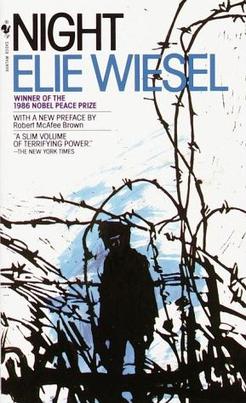 The spiritual journey as depicted in literature is often portrayed as progressive and teleological; a voyage of ascent. The oft neglected reality, however, is that not all spiritual journies are movements of advance; indeed, many are tragically regressive and find their destination in a place of darkness. Such is the case of Elie Wiesel’s memoir, Night. Wiesel’s account is not simply about the perpetual night of
Such is also true as we are on the eve of Holy Week, seduced by temptation to rush through the pain of Good Friday for the glory of Easter Sunday. As I was reading the book this week, I couldn't help but think of the opportunity for a significant spiritual experience for a person who would sit and read this book through on Good Friday. (do with this thought what you will.)
[1] Wiesel. 1986. Night., vi.
Mar 12, 2008

Mar 3, 2008


Feb 26, 2008
Out with the old, In with the new (old)...

Tonight we said good-bye to our beautiful little Rav4 and replaced her with a mini-van. Yep. We are in a new league.
Last week we bought our dear mini van from a family here, who was moving back to Korea. We sold the Rav for double of what we paid for our mini van.
We are praying, dreaming and pursuing the idea of spending the summer term at L'abri England after aaron graduates (2009). This sale helps the finance part of that tremendously!
So on to new adventures...
Feb 18, 2008


Feb 9, 2008
When, briefly, time stopped...
A brilliant experiment. If you're like me, you see these kinds of videos and wish that you had the creativity to be the brains behind something like this.
credit
more fun from improv everywhere
credit
more fun from improv everywhere
Feb 8, 2008

Feb 3, 2008
The Sacred Journey: a memoir of early days - Fredrick Buechner
 Within the covers of this book is a clear example of Buechner’s ability to intentionally listen to the sounds around him—the seemingly insignificant noises of everyday life through which God’s voice can be heard. Buechner’s analogy of God’s voice being the “alphabet of grace” (4), comparing it to the Hebrew language which carries a certain mysterious and cryptic nature owed to its lack of vowels, is embodied within the retelling of his story. I have found this to be true, also, in my own life—not only the challenge of deciphering what exactly is the voice of God among others—but then attempting to discern what it is He is trying to tell me. Buechner challenged me to listen with intentionality and curiosity—for God’s voice may be found in a ticking clock, a crowing rooster, or singing swallows. I must admit, I long to be able to find meaning in the background noise (be it aural, visual, or otherwise) but it is not a strength of mine. However, Buechner (and even Lamott) inspire me to slow down, to listen, to look, and to pause in order that I may make room for the words—cryptic as they may be—that God is speaking.
Buechner speaks of the last encounter with his father alive as when “time started” (58), that is, the point of life when each of us comes to the realization that the clock is ticking against us all and that we are not frozen in a utopian existence; rather we are in a deeply broken and fallen world and will be subjected to its pain. I wondered, “When did time start for me?” Although I have yet not found an answer to this question, it continues to come to mind not only within the context of my own life, but now within my role as a father. On the one hand I constantly live with a desire to shelter my children and protect them from the brokenness of this world, yet on the other hand I long to raise them as people who are rooted and engaged with reality—and this will bring hurt. Maybe the truth can be found simply in the reality that we are people of the Kingdom—that we are in the tension of the ‘already’ and the ‘not yet’—and through our pain we can live in great hope. Or, as Buechner puts it, “…in the long run, there can be no real joy for anybody until there is joy finally for us all”(97)—that is, when we are beyond time.
New Look/Leaf
I thought I'd take a crack at reinventing this blog, not only visually, but substantially as well. On the one hand, I'm wondering if I'm done with the whole blogging thing and content to simply post pictures of our latest trek to the beach, yet on the other hand, if for nothing more than selfish reasons, this will help me process some of what I'm learning in class and life. Some (most? all?) of what will be offered will be simply book reviews/annotations for a class I'm taking on Spiritual Pilgrimmage in Life and Literature. The reading list is brilliant. Hopefully, through these posts you will encounter both the book and myself a little further...
Jan 20, 2008


Jan 11, 2008


Jan 2, 2008


Jan 1, 2008


Dec 2, 2007
Subscribe to:
Posts (Atom)